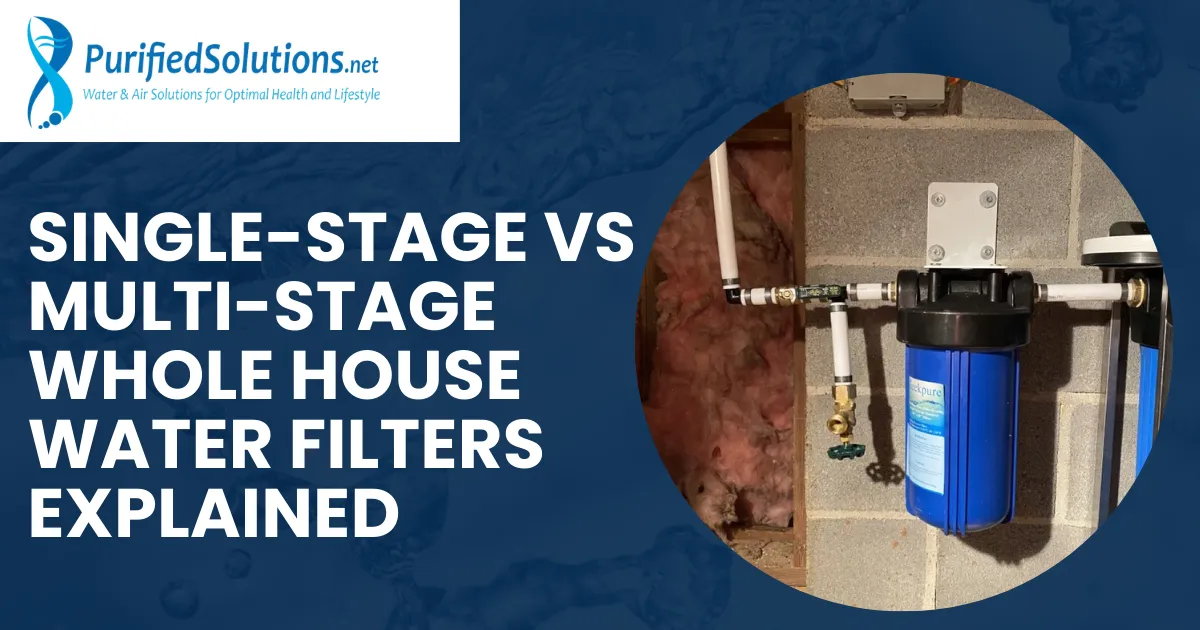
Single-Stage & Multi-Stage Whole House Filters: Differences
It might feel overwhelming to choose the right whole-house water filter. A common question asked by homeowners is: “Should I prefer a single or multi-stage whole house water filter?” Though both these systems improve water quality, they work differently.
In this blog, we will further explain the differences so that you can make the best decision in choosing between single-stage and multi-stage whole-house water filters.
What is a Whole House Water Filter?
A whole-house water filter is a system installed where water enters your home. This indicates it filters water before it reaches the faucets, showers, dishwashers, or washing machines. Unlike the under-sink filters that only treat drinking water, whole-house water systems safeguard the entire plumbing system and the water outlets.
What is a Single-Stage Whole House Water Filter?
A single-stage water filter system uses a single filtration cartridge to treat water. It works in the following ways:
Water flows through one filter medium, typically:
Carbon filter (minimizes odors and chlorine)
Sediment filter (reduces sand, rust, and dirt)
Based on the used media, it can remove chlorine, sediment, minimal odors and bad taste, and some large contaminants. Some benefits of single-stage whole-house water filter systems include less upfront cost, simple installation, easier maintenance, and being ideal for mild water issues.
Some limitations include limited contaminant removal, not being ideal for heavily contaminated water, and not being able to eliminate heavy metals, chemicals, or complex pollutants. Single-stage systems are ideal for homes that have relatively clean municipal water but small issues like visible sediment or smell.
What is a Multi-Stage Whole House Water System?
A multi-stage water filter works by using two or more filtration tanks or layers to treat water step-by-step. It works when water passes through many filtration stages:
Sediment filter: It removes dirt and particles
Carbon filter: It reduces chlorine and chemicals
KDF/Specialty media: Helps reduce heavy metals
Optional stage: Advanced filtration or UV purification
Every stage targets different contaminants and provides more via purification.
Multi-stage whole-house water systems can remove sediments, chlorine/chloramine, volatile organic compounds, lead, and other heavy metals, some pesticides, and contaminants from factories, and some microorganisms (if UV is present).
Some benefits of multi-stage systems include skin and hair benefits, better water taste and odor, a more comprehensive filtration, and overall better protection for plumbing and appliances.
Which One is Right for Your Home?
Choosing between a single-stage and multi-stage whole-house water filter ultimately depends on your home’s water quality, your health concerns, and your long-term goals. Every home has different water conditions. Some households deal with mild chlorine odor from municipal water, while others face more serious contamination from well water or aging plumbing systems.
1. Know What’s Really in Your Water
The first step in making the right choice is to know what's really in your water. Homes that get treated municipal water and only have small problems like a chlorine taste, a mild smell, or visible sediment can usually use a single-stage system. If your only goal is to improve the taste and get rid of fundamental particles like sand or rust, one stage of filtration may be enough.
2. Making a Big Difference Without Installing Anything Complicated
That relevant approach is often useful and successful for homeowners who want a cheap way to make a noticeable difference without having to install anything complicated. A single-stage system can work well without costing too much if water testing shows modest levels of contamination and no severe health problems.
3. Whole-House Filter is Excellent for Complicated Water Issues
A multi-stage whole-house water filter, on the other hand, is excellent for homes with more complicated water problems. If you get your water from a well, there is a greater chance that it will have heavy metals, pesticides, microorganisms, or high mineral levels. A multi-stage system solves these problems by filtering water in several steps, each one focusing on a distinct type of contaminant.
Why Is Water Testing Essential?
Before you choose a whole-house water filter, it is essential to test the water. Many contaminants like VOCs, bacteria, lead, or nitrates are invisible, and you cannot detect them through smell or taste. A professional water test can easily identify what is actually present in the water and to what levels.
This helps you choose the appropriate water filtration system instead of choosing or installing one that doesn’t fix the problem. Water testing ensures that your investment matches your home’s specific needs.
Cost Differences
The single-stage filtration systems usually cost less upfront as they use one filtration cartridge and need simpler installation. Though multi-stage systems are initially more expensive, they offer more protection and might reduce long-term plumbing and appliance repair costs. When comparing the costs of both these systems, you need to think beyond the cost price and consider performance, durability, and overall water quality benefits.
Final Words
Both multi-stage and single-stage house water systems enhance the water quality of your home. But as you are aware, they serve different needs. If you need a simple solution for mild water problems, a single-stage system is enough. But if you require deeper filtration and long-term protection, a multi-stage system is the best choice. You can make the ideal decision based on understanding the water quality and household needs.
Book a professional water test with Purified Solutions and get a personalized whole-house water filtration system recommendation for your home. Clean water begins with the right system.
